What Actually Changes When You Move Up the Edge AI Ladder
If you’ ve spent time deploying computer vision models at the edge, you’ ve probably lived on NVIDIA’ s Jetson line at some point – Orin Nano, Orin NX, AGX Orin. It’ s the default answer to “how do I run inference without a cloud round-trip.” It’ s cheap enough to deploy in bulk, mature enough that most of your problems are already solved on a forum somewhere, and just powerful enough to make you comfortable
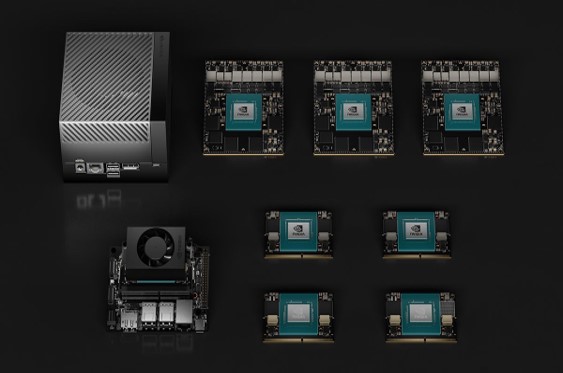
Nvidia Jetson Line Up
Nvidia Jetson Line UP
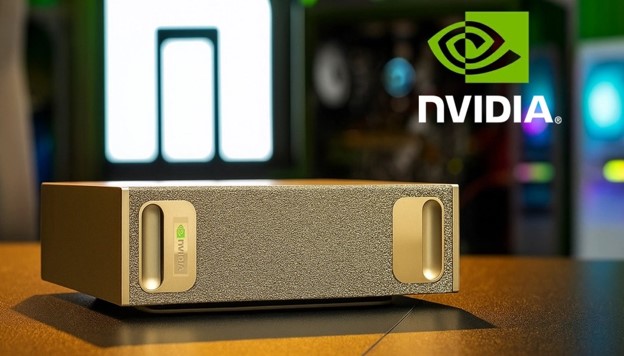
Nvidia DGX Spark
Nvidia DGX Spark
Then your pipeline grows. More cameras. Heavier models. A tracker running alongside your detector. Maybe a second model doing activity classification on top of both. And suddenly the board that felt spacious a year ago is fighting you for every megabyte of VRAM and every millisecond of frame time.
This is the point where teams start looking at DGX Spark-class hardware – and where a lot of the marketing material stops being useful, because it compares specs instead of describing what actually happens when you migrate a live pipeline.
Here’ s what I’ ve learned moving real workloads across that gap.

Why Teams Outgrow Jetson in the First Place

Jetson doesn’ t fail you because it’ s weak — it fails you because your ambitions changed faster than your compute budget. A single YOLO model with a lightweight tracker runs beautifully on an Orin-class board. The trouble starts when you stack:
None of these individually breaks a Jetson. Together, they turn every deployment into a resource-budgeting exercise — trimming batch sizes, downscaling resolution, dropping frames, fighting for milliseconds you can’t get back. At some point the honest question isn’t “how do I optimize this further” — it’s “am I solving a compute problem with software when I should be solving it with hardware.”
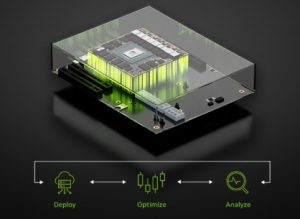
Jetson designed for: Edge Inference and Analysis
Originally Jetson designed for : Edge Inference and Analysis
The headline difference isn’ t raw throughput — it’ s headroom you stop having to think about. Multiple heavy models can sit in memory simultaneously without a spreadsheet’ s worth of careful scheduling. Multi-stream throughput stops being a constant balancing act.
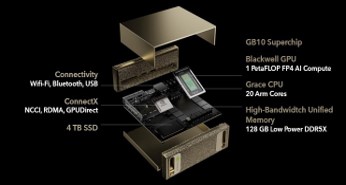
Spark packs 1 PentaFLOP of AI compute
Architectures that were previously theoretical — like running two independent detection pipelines in parallel for cross-validation — become straightforward instead of a stretch goal.
In practice, this shows up less as “everything is dramatically faster” and more as “I stopped having to make trade-offs I didn’ t want to make.”

The Migration isn't Free

This is the part vendor comparisons never mention, and it’ s where most of the real engineering time goes.
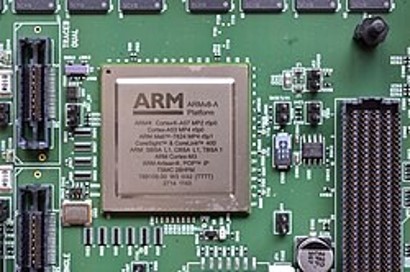
ARM64 is still a second class citizen in places you don’t expect.
Package availability driver support and community troubleshooting all thin out compared to the well worn x86 path — and even compared to Jetsons own ARM64 ecosystem which has had years to mature.
ARM64
Kernel upgrades are not harmless.

A routine pulling apt upgrade in a new kernel can silently break your GPU driver stack on a device that’ s still finding its footing. Recovering from that means digging into driver compatibility matrices, holding critical packages at known-good versions, and generally treating your update process with a level of suspicion you didn’ t need on more established hardware.

The software ecosystem is younger. JetPack has had a long time to sand off rough edges — documented gotchas, known workarounds, a large community that’ s already hit your bug. On newer high-end edge platforms, you’ re occasionally the first person to hit a given issue, which means more time reading kernel logs and less time finding someone else’ s Stack Overflow answer.

Operational discipline becomes nonoptional. Once you’ re running less mature hardware in production, things like disabling automatic upgrade timers, pinning critical packages, auditing who has sudo access, and hardening remote administration aren’ t nice-to-haves — they’ re what stands between you and an unplanned outage.

The honest Decision Framework

Here’ s the uncomfortable truth: most real-time single- or dual-camera inference workloads don’ t need this upgrade. Jetson-class hardware remains the right, cost-effective choice for a huge share of edge AI deployments, and reaching for bigger hardware because it’ s exciting rather than because you’ re actually compute-bound is a mistake I’ ve watched teams make.
Reach for DGX Spark-class hardware when:
Stay on Jetson when:

The Takeaway

The move from Jetson to DGX Spark-class hardware isn’ t a straightforward upgrade — it’ s a trade of compute headroom for operational maturity you now have to build yourself. The teams who get the most out of it are the ones who make that trade deliberately, because they’ ve actually hit a compute ceiling, not because the new hardware looked good in a spec sheet.

If you’ re standing at that decision point right now: profile your actual bottleneck before you buy anything. If it’ s compute, the upgrade will pay for itself. If it’ s software inefficiency, no amount of extra silicon will fix it — and you’ ll just be debugging the same problems on less mature hardware.

Transform your business operations with our cutting-edge AI and ML solutions, driving efficiency, accuracy, and growth.