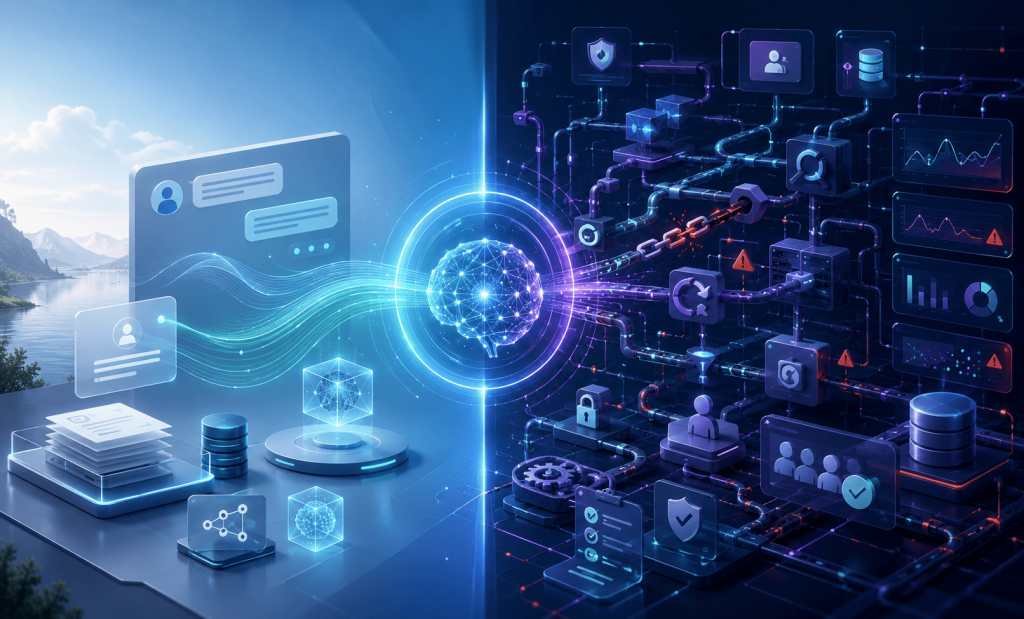
The demo was a success.
Your AI agent answered questions accurately, called APIs, summarized documents, and even completed multi-step tasks. Everyone in the room was impressed.
A few weeks later, it was deployed to production and that’s when the real challenges began.
Users asked unexpected questions. APIs failed. Permissions were missing. Response times increased. Costs increased. Security teams asked how decisions were made, and compliance teams wanted audit trails.
The AI model hadn’t changed. The environment had.
The biggest gap between a successful demo and a successful product isn’t intelligence, it’s engineering.
Most demos are carefully orchestrated.
The prompts are known. The data is clean. External services are available. Everything is designed to showcase what the agent can do.
Production is different.
Real users are unpredictable. Data is incomplete. Services time out. Networks fail. And eventually, someone asks the one question that reveals everything your demo never had to handle.
An AI agent has to perform reliably, even when the world around it doesn’t.
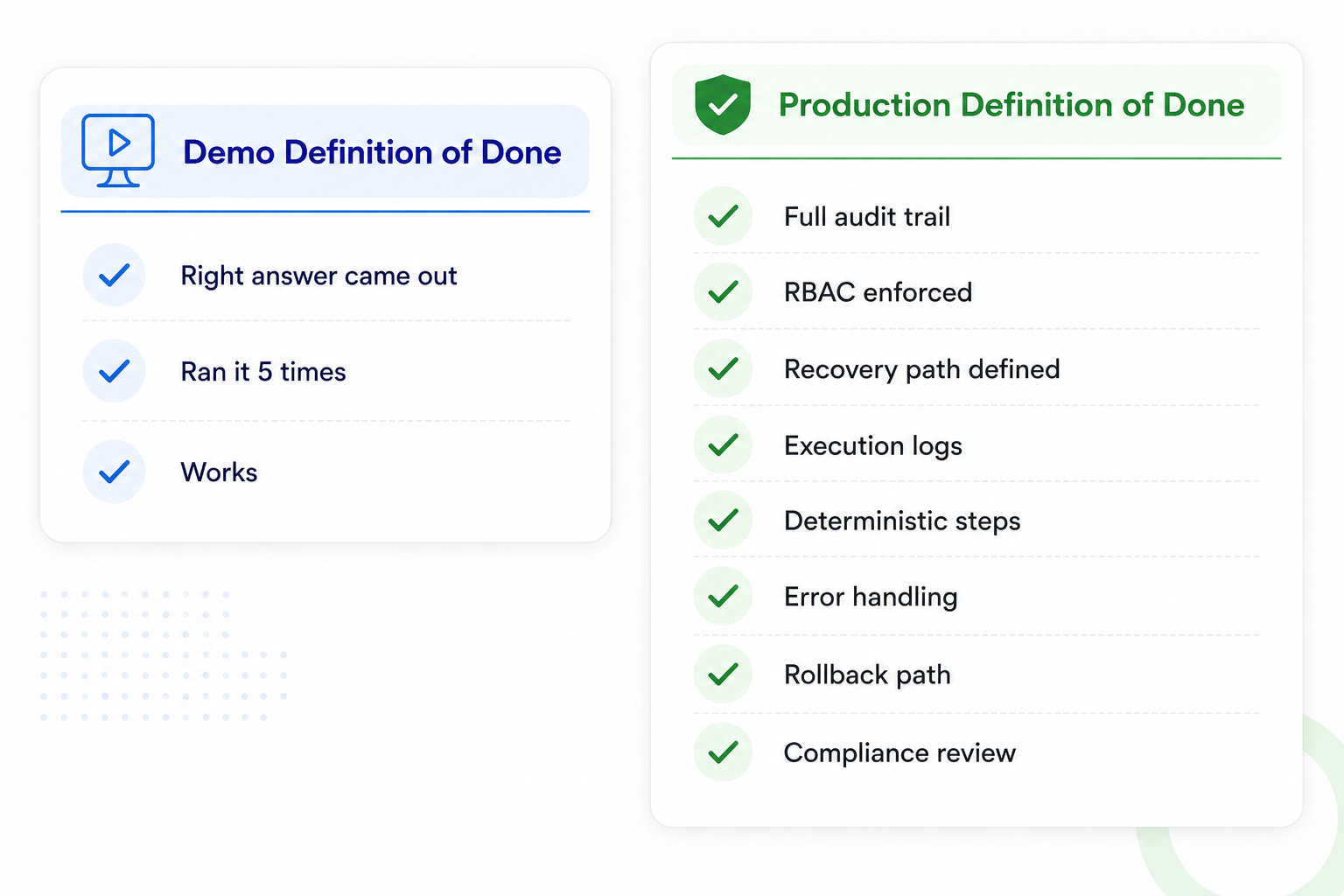
The language model is only one part of the system.
A production-ready agent also needs:
These components rarely appear in demos, but they’re often what determine success in production.
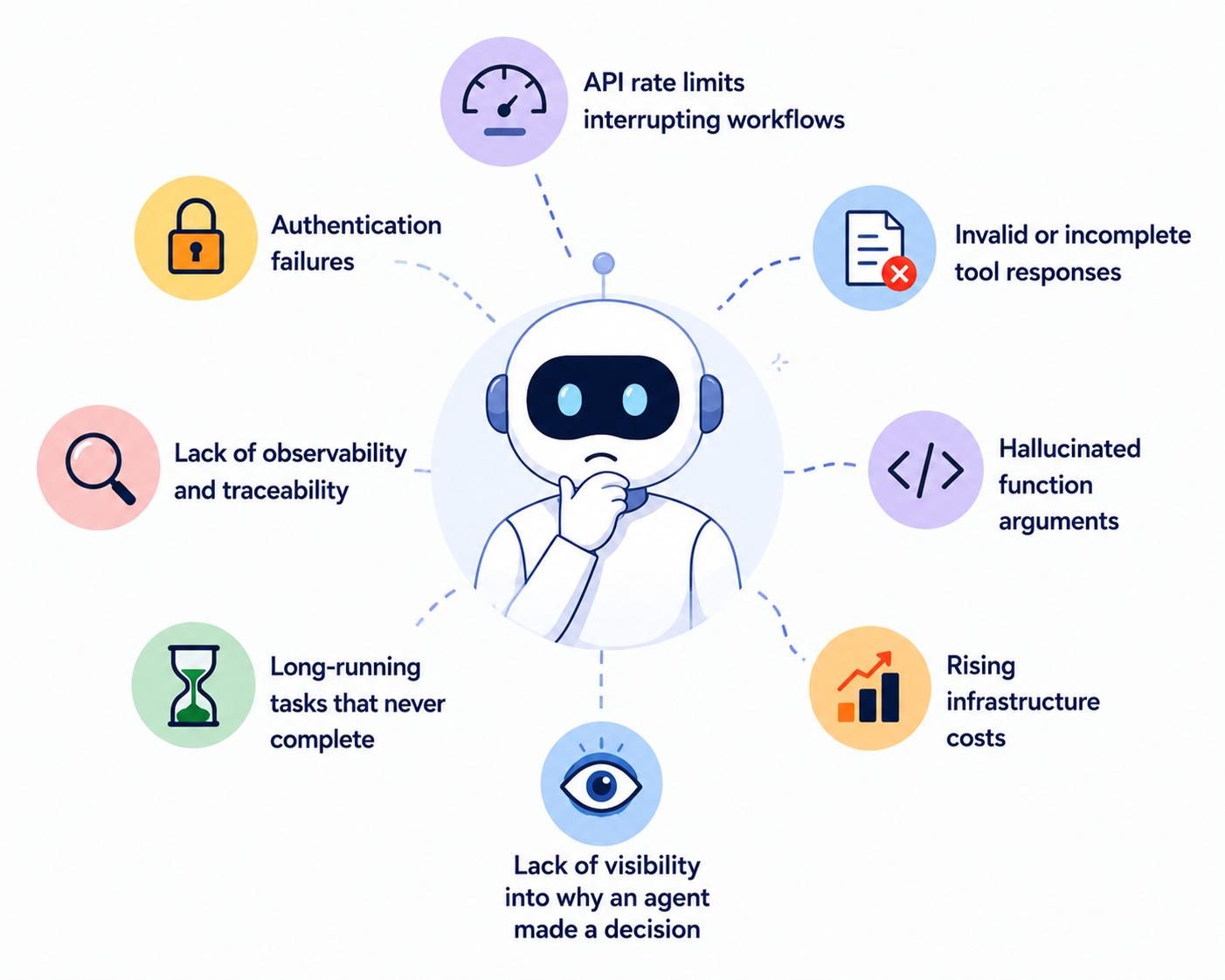
Interestingly, it's usually not the model.
Instead, teams encounter problems like:
These issues don't make headlines, but they consume most of the engineering effort.
Production systems should be designed with the expectation that failures are inevitable. APIs may become unavailable, tools can return unexpected results, workflows might stall, or external services could experience downtime.
Instead of assuming everything will work perfectly, engineering teams should focus on how the system responds when things go wrong:
Thinking through these scenarios early helps build resilient agent systems and prevents small issues from becoming major production incidents.
A prototype proves that an idea works.
A production system proves that it keeps working.
The most successful AI agents aren’t necessarily the ones with the most advanced models. They’re the ones built with reliability, observability, security, and resilience from day one.
That’s what transforms an impressive demo into software people can trust.